Does Virtual Staging Misrepresent Property Listings?

Table of Contents
What Virtual Staging Is and How It Works
Virtual Staging Disclosure Requirements for Real Estate Agents
How to Disclose Virtually Staged Images Properly
Virtually Staged Photos Examples: What Crosses the Line
Does Virtual Staging Misrepresent Properties?
Buyer Expectations and How Virtual Staging Affects Them
Virtual Staging Versus Traditional Staging: Key Differences
Protecting Your Reputation: Best Practices for Virtual Staging
Frequently Asked Questions
Last Updated: October 11, 2026
What Virtual Staging Is and How It Works
Virtual staging digitally adds furniture, decor, and design elements to photos of empty properties, allowing agents to show buyers how a vacant room could look when furnished.
The technology uses digital editing tools to add furniture, lighting, and accessories that match the property's style and layout, creating photorealistic images that help buyers visualize potential. Vacant properties present a marketing challenge, buyers struggle to imagine themselves in empty rooms. Virtual staging bridges that gap by presenting rooms in their best possible light.
The process involves photographing the vacant property, using design software to add digital furniture and decor, ensuring natural lighting and shadows, and creating multiple design options. Virtual staging requires no physical furniture delivery or removal, making it faster and more cost-effective than traditional staging.
Virtual Staging Disclosure Requirements for Real Estate Agents
Real estate professionals have a legal and ethical obligation to disclose when images have been virtually staged. Virtually staged images must be clearly labeled so buyers know they are viewing digitally altered versions, not actual photographs of the property's current condition.
State and Regulatory Requirements
Disclosure rules vary significantly by jurisdiction. Several states have adopted explicit virtual staging disclosure mandates:
California requires clear labeling in all marketing materials and MLS listings; failure to disclose can constitute fraud.
New York mandates watermarks or captions visible to consumers and disclosure in the property description.
Texas requires agents to avoid deceptive practices; many MLS boards have adopted labeling policies.
Florida requires disclosure with clear, conspicuous labeling in the listing narrative.
Illinois requires identification of staged images and written disclosure to all parties before transaction completion.
MLS Platform and Listing Service Requirements
Most MLS systems require agents to flag virtually staged photos in metadata or use a dedicated category. Some mandate specific watermark formats, limit the number of staged images per listing, or require at least 50% actual photos. Many prohibit staged images as the primary listing photo. Violating MLS policies can result in listing suspension or disciplinary action.
Appraisal and Financing Implications
Lenders and appraisers scrutinize virtually staged images, as they can affect perception of property condition and market value. If an appraisal is significantly lower than the listing price and virtually staged images are identified as a contributing factor, it may trigger renegotiation or deal complications.
The Key Principle: Transparency Across All Channels
The consistent requirement across all jurisdictions is transparency. Without clear disclosure, virtually staged images can cross the line into misrepresentation and expose agents to legal liability, complaint investigations, and reputational damage.
How to Disclose Virtually Staged Images Properly
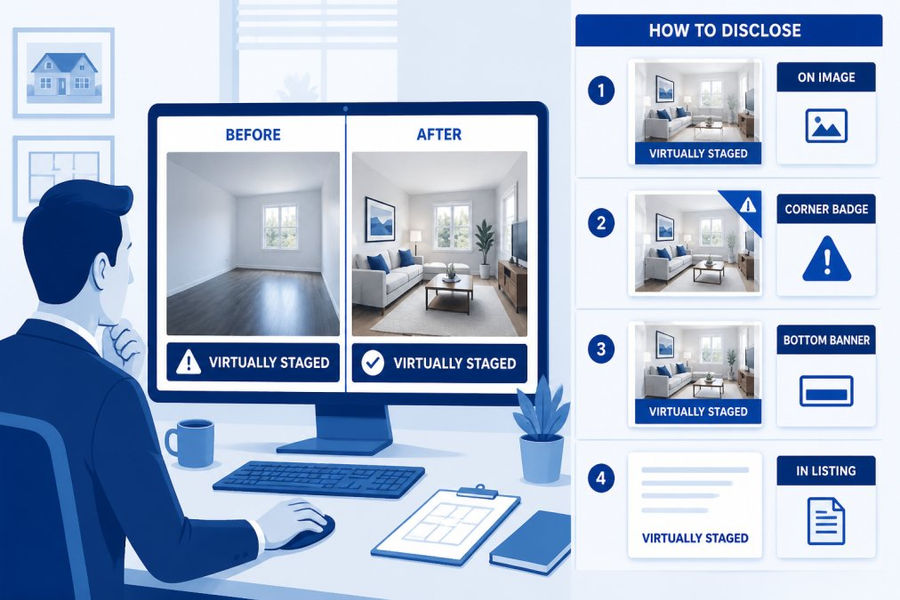
Proper disclosure requires: (1) visible watermarks or captions stating "Virtually Staged" on each image; (2) disclosure in the listing description specifying which rooms are enhanced; (3) flagging staged images in MLS metadata per local requirements; and (4) including genuine photographs showing the property's actual condition. Never use only virtually staged photos in a listing. Clear disclosure protects both agents and buyers and prevents legal issues.
Virtually Staged Photos Examples: What Crosses the Line
Some virtual staging edits enhance a space responsibly, while others misrepresent the property so dramatically that they become deceptive. Understanding the difference is critical for agents who want to market properties ethically and avoid legal exposure.
The Legal Standard: Material Misrepresentation
Virtual staging crosses into misrepresentation when it alters a material fact, one that would reasonably influence a buyer's decision or offer price. Edits that alter permanent features, structural elements, or dimensions misrepresent the property itself. Edits that add removable items or improve lighting are lower-risk because they do not claim the property has features it lacks.
Acceptable Virtual Staging
Adding basic furniture: Inserting a bed, sofa, or dining table helps buyers understand space function and fit. Widely accepted when disclosed.
Inserting tasteful decor: Adding artwork, throw pillows, plants, or rugs is acceptable; these items are removable and do not alter structure.
Adjusting lighting: Brightening dark rooms or softening shadows is acceptable if realistic. Completely changing natural light character (e.g., making north-facing appear south-facing) crosses into misrepresentation.
Staging key rooms: Focusing on primary bedroom, kitchen, or living room is accepted practice.
Removing clutter: Digitally removing boxes, personal photos, or temporary items is acceptable and does not misrepresent the property.
Virtual Staging That Crosses the Line
Adding structural elements: Inserting pools, decks, patios, fireplaces, or built-in shelving that don't exist is material misrepresentation and grounds for legal action.
Removing visible damage: Erasing water damage, mold, cracks, or stains misrepresents actual condition and conceals material information.
Changing permanent fixtures: Altering wall colors, flooring, or cabinets misrepresents what buyers will actually see.
Staging unusable rooms: Staging inaccessible or blocked rooms as functional misrepresents actual utility.
Overstaging: Excessive furniture can falsely enlarge rooms; buyers measuring in person will feel misled.
Adding architectural features: Inserting windows or skylights that don't exist is material misrepresentation.
Altering views: Replacing actual views (parking lot) with different ones (mountains) is misrepresentation and material to property value.
Changing dimensions: Digitally enlarging rooms or removing walls misrepresents the actual floor plan.
The Practical Test: The In-Person Tour
A useful guideline: If a buyer touring in person would immediately notice the staged image does not match reality, the edit has crossed the line. A virtually staged living room with a sofa passes this test, the buyer can imagine it furnished.
Liability and Consequences
Agents who use virtual staging that crosses into misrepresentation face state commission complaints, legal liability for fraud or misrepresentation, transaction disputes, reputational harm, and MLS sanctions.
Does Virtual Staging Misrepresent Properties?
Virtual staging can misrepresent properties when disclosure is absent or when edits are too extreme, practices that virtual staging misrepresent the property's actual condition. The practice itself is not inherently deceptive, but it becomes problematic when agents use it to hide problems or fabricate features.
Many buyers report feeling disappointed when they tour a property in person and find it looks nothing like the virtually staged photos. This disconnect damages trust and can lead to negative reviews, failed negotiations, or even legal disputes. Some buyers have filed complaints with state real estate commissions after discovering that virtually staged images showed rooms that looked dramatically different from reality.
The key to responsible virtual staging is honesty. When agents disclose clearly and stage responsibly, virtual staging becomes a legitimate marketing tool. When agents fail to disclose or create unrealistic images, virtual staging becomes misrepresentation.
Real estate professionals must ask themselves: Would I be comfortable explaining these edits to a buyer in person? If the answer is no, the images have likely crossed the line.
Buyer Expectations and How Virtual Staging Affects Them
Buyers form expectations based on listing photos. When those photos include virtually staged images, buyers expect to see rooms that are close to the staged version when they visit in person. A significant gap between the listing photos and the actual property creates disappointment and erodes trust.
Research shows that buyers spend an average of 5 to 10 minutes reviewing online listings before deciding whether to schedule a showing. During that time, photos are the primary influence on their decision. Virtually staged images can increase buyer interest by showing potential.
Some buyers specifically look for disclosure of virtually staged images and adjust their expectations accordingly. Others miss the disclosure entirely or don't fully understand what it means. This gap in understanding is why clear, prominent disclosure matters so much.
When virtual staging is done well and disclosed properly, it helps buyers envision the property's potential. When it's done poorly or without disclosure, it sets unrealistic expectations and damages the agent's credibility.
Virtual Staging Versus Traditional Staging: Key Differences
Traditional staging involves physically bringing furniture and decor into a property to showcase its potential. Virtual staging does the same thing digitally. Both approaches aim to help buyers visualize a space, but they differ in cost, time, and flexibility.
Traditional staging advantages:
Creates a completely authentic look
Allows buyers to experience the space in person
No disclosure issues, the furniture is actually there
Works well for properties that will be occupied before sale
Traditional staging disadvantages:
Costs several hundred to several thousand dollars
Takes time to arrange and later remove
Not practical for vacant properties on the market long-term
Requires coordination and logistics
Virtual staging advantages:
Costs significantly less than traditional staging
Can be completed in days rather than weeks
Easy to create multiple design options
Works well for vacant properties
Virtual staging disadvantages:
Requires clear disclosure to be ethical
Can look unrealistic if done poorly
May disappoint buyers if actual property differs significantly
Relies on buyer understanding of disclosure labels
For many agents, virtual staging offers a practical middle ground. It's more affordable than traditional staging and faster to execute. However, it requires careful execution and transparent disclosure to avoid misrepresenting properties.
Protecting Your Reputation: Best Practices for Virtual Staging
Agents who use virtual staging should follow these practices to protect their reputation and avoid ethical or legal issues:
Be selective about what you stage:
Stage only rooms that benefit from showing potential
Avoid staging rooms that are already in good condition
Never stage rooms with structural damage or major issues
Keep edits realistic:
Use furniture and decor that matches the property's style and price point
Avoid staging that makes the space look dramatically different
Ensure lighting and shadows appear natural
Disclose prominently and consistently:
Label every virtually staged image clearly
Mention virtual staging in the listing title or description
Use your MLS's disclosure tools correctly
Provide genuine photos:
Always include actual photographs of the property
Show rooms from multiple angles
Let buyers see the property's real condition
Train your team:
Ensure everyone understands disclosure requirements
Use consistent labeling and messaging
Document which images are staged
Use professional services:
Work with experienced virtual staging providers
Review samples before committing to a service
Verify that the provider understands disclosure requirements
When agents approach virtual staging responsibly, it becomes a valuable marketing tool.
Virtual staging is a legitimate marketing tool when used transparently. The challenge for agents is balancing the desire to showcase property potential with the obligation to be honest with buyers. By disclosing clearly, staging responsibly, and providing genuine photos alongside enhanced images, agents can use virtual staging to attract more interested buyers while protecting their reputation and avoiding legal issues. Ready to elevate your property listings with professional virtual staging and photography? Book now with REimage Real Estate Media and get next-day delivery on all your media services.
Frequently Asked Questions
Is virtual staging legal for real estate listings?
Virtual staging itself is legal, but how you use it matters. The National Association of Realtors Code of Ethics requires agents to be honest in all representations. Virtual staging becomes illegal when it materially misrepresents the property, such as adding rooms that don't exist, hiding structural damage, or changing the layout in ways that deceive buyers. Disclosure of virtually staged images is required in most jurisdictions. Always check your state and local regulations, as some areas have stricter rules than others.
How should agents disclose virtually staged photos?
Place clear, visible labels on virtually staged images such as 'Virtually Staged' or 'Digitally Enhanced' in a font large enough to read easily. Include disclosure language in your listing description stating which photos have been virtually staged. Some MLSs require specific labeling formats, so verify your local MLS rules. The disclosure should appear at the point of sale, on the listing itself, not buried in fine print. Consistency across all your listings builds trust with buyers and protects you from liability.
What changes should never be made in a virtually staged photo?
Never add or remove structural elements like walls, windows, or doors. Don't hide major defects, water damage, or foundation issues with digital edits. Avoid changing the room's dimensions or layout in ways that misrepresent the actual square footage or flow. Don't add features the property doesn't have, such as a fireplace or built-in shelving. Keep lighting and color grading realistic to actual conditions. These edits cross into material misrepresentation and can expose you to legal action if buyers discover the discrepancy after purchase.
Can virtual staging make a room look larger than it is?
Yes, but there are ethical limits. Thoughtful furniture placement and lighting can make a room appear more spacious without lying about dimensions. However, digitally stretching walls, removing walls entirely, or adding square footage crosses the line into misrepresentation. Buyers will notice when they tour the property in person. The goal of virtual staging is to help buyers visualize potential, not to deceive them about the actual layout and size. Professional virtual staging enhances appeal while maintaining accuracy.
BOOK NOW



Comments