Hiring Professional Real Estate Photographers: 7 Tips

Table of Contents
Why High-Quality Images Drive Listing Performance
Questions to Ask a Real Estate Photographer Before Booking
Portfolio Review: What to Look For
Equipment and Technical Standards
Real Estate Photography Pricing Guide: What You're Paying For
How to Compare Two Quotes Apples-to-Apples
Real Estate Photography Red Flags to Watch For
Licensing and Usage Rights
Communication and On-Site Etiquette
Post-Processing Standards: What 'Professional Editing' Actually Means
Real Estate Photography Turnaround Time: What to Expect
Vetting for Commercial vs. Residential Properties
Post-Processing and Editing Expectations
Frequently Asked Questions
Last Updated: September 11, 2026
Why High-Quality Images Drive Listing Performance
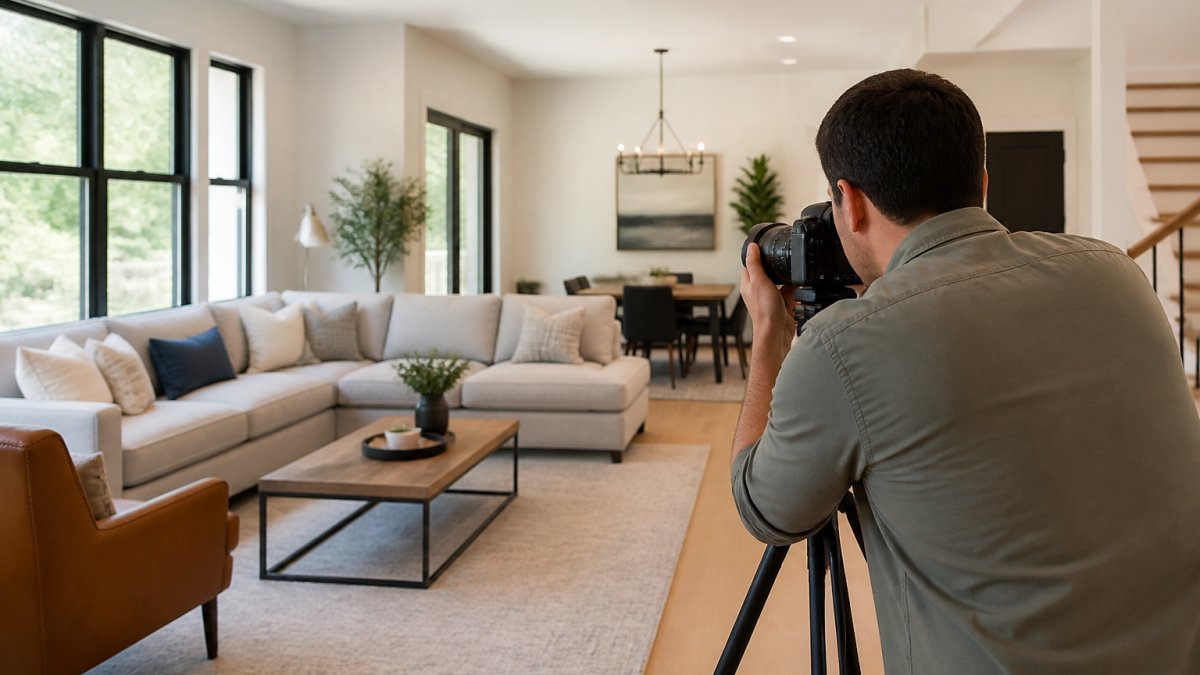
Professional real estate photographers capture a property with specialized equipment, deliberate lighting, and post-production editing so that listing images show a home at its most accurate and most appealing. The payoff shows up before a buyer ever steps inside. According to National Association of Realtors research on home buyers and sellers, the vast majority of buyers start their search online, which means your photos are the listing. This guide from REimage Real Estate Media covers the questions, contracts, and red flags that separate a smooth shoot from an expensive redo.
High-quality images win the click in a crowded search feed, set honest expectations that reduce wasted showings, and give a property a longer shelf life online. Weak photos, blown-out windows, dim corners, crooked wide-angle frames, tell buyers the home is a project, even when it isn't.
Image quality also affects your negotiation position: a sharp, well-lit listing signals a well-maintained property and a motivated, organized seller.
Key Takeaway Your photos are the first showing. Buyers decide whether to tour based on images alone, so a strong photo set reduces dead-end showings and keeps serious buyers in the pipeline.
Questions to Ask a Real Estate Photographer Before Booking
The best way to avoid a bad shoot is to ask the right questions before you book. A short, direct conversation covers turnaround, licensing, and editing expectations in minutes.

Ask these before you commit:
What's your standard turnaround time, and is it guaranteed in writing?
Who owns the images, and what usage rights do I get?
Is editing included, and how far does it go?
Do you shoot drone, video, and floor plans in-house or subcontract?
What's your policy if weather or access ruins the shoot?
Can you handle multiple properties on a recurring schedule?
The answers tell you more than any portfolio page; hesitation on licensing or turnaround is a signal.
Portfolio Review: What to Look For
A portfolio review should test consistency, not just your favorite shot: look for a full set from one property, shot in the same light and style.
Check for straight vertical lines, windows that show detail instead of white blowout, and rooms that look the size they actually are. If every image is a dramatic wide-angle with warped edges, expect the same on your listing.
Equipment and Technical Standards
Equipment matters less than the person using it, but a wide-angle lens, sturdy tripod, and off-camera lighting are the minimum kit for interiors.
Ask how they handle a room with one small window and mixed lighting. The answer reveals whether they understand flash-ambient balancing or just hope for the best.
Real Estate Photography Pricing Guide: What You're Paying For
Real estate photography pricing depends on property size, bundled services, and delivery speed. There is no standard rate, and any provider quoting one flat number for every home is cutting corners somewhere.
Most providers price one of three ways, and knowing which model you're buying tells you where the risk sits:
Per-listing flat rate. One price for a defined package (for example, a set number of edited images plus a floor plan). Simple to budget, but the package caps image count, so a large home may trigger overage fees.
Tiered by square footage or bedroom count. The rate steps up as the home gets larger because on-site time and editing volume grow. This is the most common structure for residential work.
À la carte add-ons. Base shoot plus separately priced drone, video walkthrough, floor plan, and virtual staging. Flexible, but the line items add up fast if you don't ask for the full menu up front.
What you're paying for breaks into a few buckets:
Cost Component | What It Covers | Why It Matters |
On-site time | Setup, shooting, staging adjustments | Rushed shoots miss rooms and light |
Editing and processing | HDR blending, color, sky replacement | Raw files rarely look finished |
Add-on services | Drone, video, floor plans, virtual staging | Bundling saves coordination time |
Turnaround speed | Rush vs. standard delivery | Fast delivery protects your launch date |
Usage rights | Licensing terms and duration | Unclear rights create legal risk |
Confirm these pricing mechanics in writing before you book:
Image count and overage. Ask how many edited images are included and what an extra image costs. A 4,000-square-foot home can easily need 35-45 finished frames; a small condo may need 15-20 (nar.realtor).
Reshoot and weather policy. Confirm whether a return trip for bad weather, a locked door, or a seller who wasn't ready is free, discounted, or billed at full rate.
Rush surcharges. Next-day and same-day delivery typically carry a premium over standard turnaround. Get the threshold in writing so a deadline crunch doesn't become a surprise invoice.
Travel radius. Many providers include a base service area and add a per-mile or per-trip fee beyond it.
For current rates, request a quote from your provider rather than relying on outdated blog numbers. REimage Real Estate Media bundles a free basic 2D floor plan with every order.
Watch Out The cheapest quote is rarely the cheapest outcome. A low rate that excludes editing, licensing, or a reshoot policy often costs more when the first set fails and you have to book a second shoot under deadline.
How to Compare Two Quotes Apples-to-Apples
Two quotes for the same home rarely describe the same deliverable. Line them up on five variables: edited image count, whether editing is included, turnaround guarantee, usage/licensing terms, and reshoot policy. A higher headline number is often cheaper once you add what the lower quote left out. Ask each provider to confirm those five items in writing.
Real Estate Photography Red Flags to Watch For
The clearest red flags with real estate photographers show up in the contract and the inbox, not the camera bag. Vague licensing, slow replies, and no written turnaround terms cause the most damage, and licensing is where most agents get burned, because owning images versus licensing them is the difference between controlling your marketing and renting it.
Licensing and Usage Rights
Image licensing defines who can use the photos, where, and for how long. Get it in writing before the shoot; a verbal "use them however" is worth nothing in a dispute.
There are two fundamentally different arrangements, and they are not interchangeable:
Work made for hire / copyright assignment. The photographer's copyright transfers to you (or your brokerage). You own the images and can reuse them indefinitely. This is the broadest grant and usually the most expensive.
License grant. The photographer retains copyright and grants you permission to use the images under stated terms. This is the more common arrangement, and the terms are where disputes live.
When you review a license, check these specific clauses:
Scope of use. Is the license limited to listing the property for sale or lease, or does it cover your broader marketing, social media, print, email campaigns, your website portfolio?
Duration. Does the license run for the life of the listing, a fixed term (for example, one or two years), or perpetuity? A listing-only license means you cannot reuse the images after the sale closes.
Exclusivity. Can the photographer resell or reuse the images for their own portfolio, stock, or another client? If you don't want your listing photos showing up in a competitor's marketing, get exclusivity in writing.
MLS and syndication rights. This is the clause most agents overlook. When you upload photos to an MLS, the MLS's rules and your agreement with it typically grant the MLS and its syndication partners a license to redistribute those images to third-party sites. Confirm your photographer's license permits MLS submission and downstream syndication, otherwise you can be in breach the moment the listing goes live.
Indemnification. If a third party claims the images infringe their rights (for example, a drone shot over restricted airspace or a staging vendor's intellectual property), who bears the cost? A professional agreement addresses this.
The U.S. Copyright Office guidance on photographic works is a useful reference for how image ownership and transfer actually work, including what a written transfer requires.
Watch Out A license that says "for marketing purposes" without defining scope, duration, or syndication is not a license, it's an argument waiting to happen. Ask for the specific clauses above in writing before the shoot.
Communication and On-Site Etiquette
Communication and on-site etiquette separate a smooth shoot from a stressful one. A professional confirms the appointment, arrives on time, and walks the property with you before unpacking gear.
Red flags are easy to spot: no confirmation, no questions about access, no plan for occupied homes. If you manage rentals, ask how they coordinate with tenants and whether they schedule directly.
A short pre-shoot checklist you can send the photographer, and the seller, prevents most on-site problems:
Confirm the shoot window, access method (lockbox, key, gate code), and who will be on site.
Ask the seller to clear counters, put away personal items, turn on all interior lights, open blinds, and move vehicles from the driveway.
Note any rooms or features that must be captured, and any that should be avoided.
Flag pets, alarm systems, and any areas that require special access.
Agree on how the photographer will handle a room that isn't photo-ready, reshoot, skip, or edit around it.
For occupied properties, send tenants a short notice with the shoot window and ask them to clear counters and personal items the night before. Photographers who offer to coordinate access themselves save you a full afternoon of back-and-forth. ::: evaluating photography portfolios.
Post-Processing Standards: What 'Professional Editing' Actually Means
Editing is the second place red flags hide, because "professional editing included" can mean anything from a quick exposure pass to full HDR blending and sky replacement. Ask which techniques are standard:
HDR blending merges multiple exposures so windows and interiors both read clearly, the baseline for interior work.
Flash-ambient balancing uses off-camera lighting to control color and shadow rather than relying on software alone.
Sky replacement swaps a blown-out or gray sky for a cleaner one; it's common but should never misrepresent weather or the property's actual condition.
Virtual staging adds furniture digitally. Ask how staged images are labeled, because disclosure expectations vary and buyers notice when a room looks nothing like the photos.
What editing should not do is misrepresent the property. Adding furniture that isn't there, or removing structural flaws, crosses into false advertising. Set expectations up front: request before-and-after samples, confirm how much retouching is included, and agree on what counts as a revision versus a new edit.
Real Estate Photography Turnaround Time: What to Expect
Real estate photography turnaround time is the gap between the shoot and your delivered, edited images. Standard delivery commonly runs a few business days; rush options compress that to next-day or same-day for a fee.
Turnaround depends on editing volume, not just shoot length: a large home with drone footage and a virtual tour takes longer than a small condo. Confirm the timeline in writing and ask what happens if a deadline slips.
For listings that go live the next morning, ask specifically about guaranteed next-day delivery before you book. REimage Real Estate Media builds next-day delivery into its standard service.
Vetting for Commercial vs. Residential Properties
Commercial and residential photography demand different skills, and strength in one isn't automatic in the other. Residential work focuses on warmth, natural light, and lifestyle appeal; commercial real estate photography emphasizes scale, structure, and architectural accuracy.
Ask which property type the photographer shoots most often. A portfolio of cozy family homes may not translate to a warehouse, retail space, or multi-unit building. For commercial work, confirm they handle large interiors, exterior drone coverage, and consistent lighting across big open spaces.
If you manage both residential and commercial listings, look for a provider with a broad service range rather than juggling multiple vendors. REimage Real Estate Media covers drone imagery, floor plans, and virtual staging under one booking.
Post-Processing and Editing Expectations
Post-processing is where a good shoot becomes a great listing, and where expectations quietly diverge. Editing should correct exposure, balance color, and blend HDR frames so windows and interiors both read clearly.
What editing should not do is misrepresent the property. Sky replacement and brightness correction are standard. Adding furniture that isn't there, or removing structural flaws, crosses into false advertising. Ask any provider using virtual staging how they label staged images, because disclosure rules vary and buyers notice when a room looks nothing like the photos.
Set expectations up front: request before-and-after samples, confirm how much retouching is included, and agree on what counts as a revision versus a new edit.
Frequently Asked Questions
What should I look for in a real estate photographer's portfolio?
Look for consistent lighting, straight vertical lines, and accurate color representation. Check if the portfolio includes properties similar to yours in size and style. Verify they show both interior and exterior shots, and confirm the images are sharp at full resolution. A strong portfolio demonstrates wide-angle lens use, proper HDR processing, and natural-looking results that make rooms feel inviting. Also confirm the photographer has experience with your property type, whether residential, commercial, or short-term rental.
What are the biggest red flags when hiring a real estate photographer?
Watch for photographers who cannot provide a written contract or usage rights agreement. Other red flags include portfolios with inconsistent quality, no clear turnaround time commitment, and unwillingness to share client references. Be cautious if they lack proper insurance or cannot explain their editing process. Also avoid anyone who promises unrealistic results or pressures you into packages without understanding your listing needs. A professional should answer questions clearly and provide transparent terms before you book.
How quickly should a professional real estate photographer deliver photos?
Standard turnaround time for professional real estate photography ranges from 24 to 72 hours, depending on the provider and editing complexity. Some companies offer next-day delivery for standard shoots. Drone footage, virtual staging, and floor plans may add additional time. Always confirm the delivery timeline in writing before booking, especially if your listing goes live soon. Ask whether rush delivery is available and what it costs if you need images faster than the standard window.
How much does professional real estate photography typically cost?
Pricing depends on property size, location, services included, and delivery speed. Basic packages for smaller homes cost less than comprehensive packages covering large properties with drone footage, virtual staging, and floor plans. Rather than comparing only base rates, evaluate what each provider includes: editing quality, usage rights, turnaround time, and add-on services. Request itemized quotes so you can compare apples to apples. Some providers offer volume discounts for agents with multiple listings.
What is the difference between HDR and flash photography for listings?
HDR photography combines multiple exposures to balance bright windows and dark interiors, producing natural-looking images with minimal setup time. Flash-ambient photography uses external flashes to light rooms evenly, giving more control over color and shadows but requiring longer shoot times. HDR works well for most residential listings, while flash-ambient suits high-end properties where precise lighting matters. Ask your photographer which method they use and why, since the right choice depends on the property's features and your marketing goals.
Are you supposed to tip a real estate photographer?
Tipping is not standard practice for real estate photography services. Photographers set their rates to cover their time, equipment, and editing work. If you feel the service exceeded expectations, a positive review, referral, or repeat booking is more valuable than a tip. Some agents offer water or snacks during longer shoots as a courtesy. Focus on clear communication and prompt payment rather than tipping, and confirm whether any gratuity expectations exist before the shoot.
Do I need to prepare the property before the photographer arrives?
Yes. Declutter surfaces, remove personal items, open blinds for natural light, and ensure all lights work. Clean windows, tidy landscaping, and park vehicles away from the driveway. Staging key rooms helps, but even basic tidying makes a difference. Confirm with your photographer whether they handle minor staging adjustments or if that is your responsibility. Proper shoot preparation reduces editing time and produces more accurate, appealing images that represent the property well.
Hiring the right real estate photographers comes down to asking better questions before you book, not fixing problems after delivery. REimage Real Estate Media handles the media production so you can focus on closing, with next-day delivery, a free basic 2D floor plan on every order, and 24/7 online booking for drone photography, floor plans, and virtual staging. Get started with REimage Real Estate Media and put sharper visuals behind every listing.
BOOK NOW

Comments